
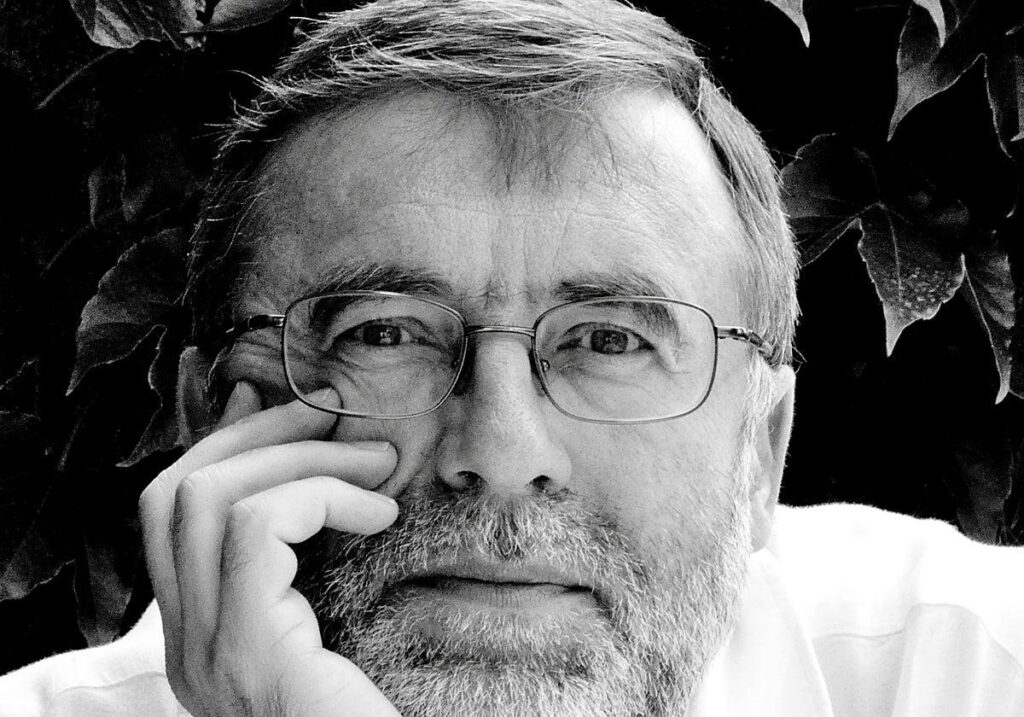
Matei Visniec
Jalal Tehrani’s Single Cells reminds me of my youth, when, as a writer, I had to confront censorship and find new ways to expand my means of expression. In that search, I discovered a mysterious and complex language built largely on allegory and symbolism. Poetic, comic, and absurd ideas gradually became part of my literary vocabulary.
I learned how to speak indirectly. More often than not, indirect expression proved far more powerful than direct statement. It is no coincidence that irony and allegory became defining features of literature in the Soviet Union and the emerging democracies of Eastern Europe during the twentieth century. These were precisely the places and times in which artists were forced to confront censorship.
When an inquisitive writer faces prohibitions and cultural restrictions, adaptation becomes inevitable. What I realized while reading this play is that language always prevails. It is ultimately more powerful than any administrative authority.
In Single Cells, Jalal Tehrani constructs a collage of three stories populated by extraordinary and unconventional characters. The play is filled with metaphysical and theatrical questions that refuse easy answers.
Its unanswered questions burn. The play is sharp, cutting like a blade. It is immediately apparent that great craftsmanship and subtle provocation lie behind every line. At the same time, the work embodies a profound struggle against self-censorship. Every word and every gesture becomes a carefully laid trap for the audience. Tehrani places us before a world whose complexity constantly challenges our assumptions, then quietly invites us to witness the consequences.
This drama reads like a poem. It does not reveal all of its clues at once. Persian literature has long been shaped by a rich tradition of poetry and philosophical myth, and this legacy can be felt throughout Tehrani’s writing.
Perhaps poetry itself has always played a central role in the history of indirect expression. Whenever direct speech is forbidden—or even merely constrained—poetry finds another path.
Europe discovered the extraordinary power of Iranian cinema roughly two decades ago. Iranian filmmakers demonstrated how profound artistic expression could emerge from the simplest means. Their films often suggest more than they explicitly show; everything appears as though seen through a watermark, inviting the viewer to complete the image. The same principle is at work here. Reading Tehrani is like watching a continuous balancing act on a tightrope.
I admire the Iran that preserves the memory of humanity and civilization through its culture. For that reason, it is deeply valuable to encounter—even for a brief moment—the unique atmosphere that Jalal Tehrani has created and shared with us.
Entering his writing is not without risk. He has hidden pearls beneath the surface of his work. Only those willing to dive into that ocean will discover them.
After reading his plays, I am convinced that Jalal Tehrani deliberately conceals countless possible interpretations. It is for us, the readers and spectators, to adapt ourselves to his artistic language and discover the indirect path through which he chooses to speak.