
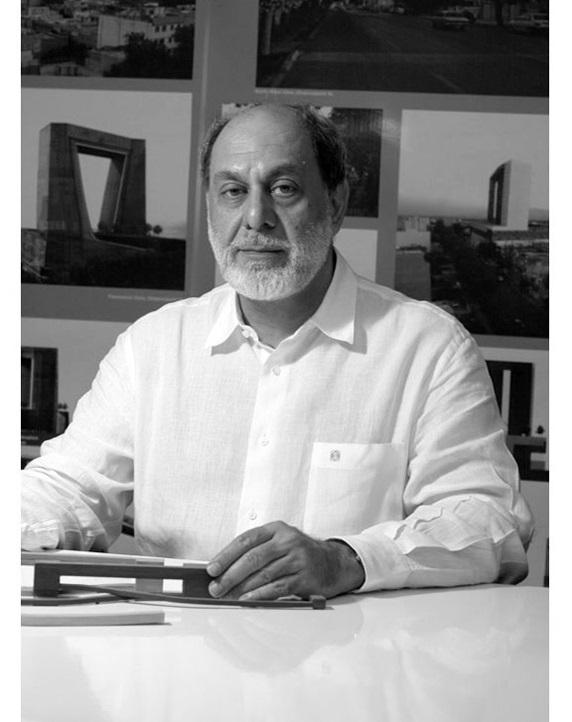
Bahram Shirdel
I’m not sure I can place Mr. Tehrani’s work within the broader context of Iranian theatre—or even theatre in Tehran—because I don’t know enough about the field to make that kind of assessment. My perspective on his work comes primarily from architecture. That’s how I was introduced to it: through its architectural qualities rather than its theatrical ones.
What interests me most about Mr. Tehrani’s work is its treatment of space. In theatre, space is often understood simply in terms of set design, but I approach it in much the same way that I approach architectural space. In this respect, I have found certain parallels between Jalal Tehrani’s work and that of Robert Wilson, particularly in their use of space, atmosphere, and scenography. I find this especially compelling because I believe I approach architecture in a similar way.
What I find particularly intriguing about Mr. Tehrani’s work is his conception of theatrical space. He creates spaces that are not governed by conventional perspective. Instead, they resist homogeneous, rational, or predictable spatial organization. This approach to space complements the subjects and narratives of his plays. His stories, too, avoid linear or perspectival storytelling. Rather than moving toward a single fixed conclusion or a conventional dramatic structure, they unfold in ways that are open, layered, and spatial in their own right.